

By Turi Trainor
The Lexington city manager must continue to live in town after the state legislature rejected a proposed change to the city charter.
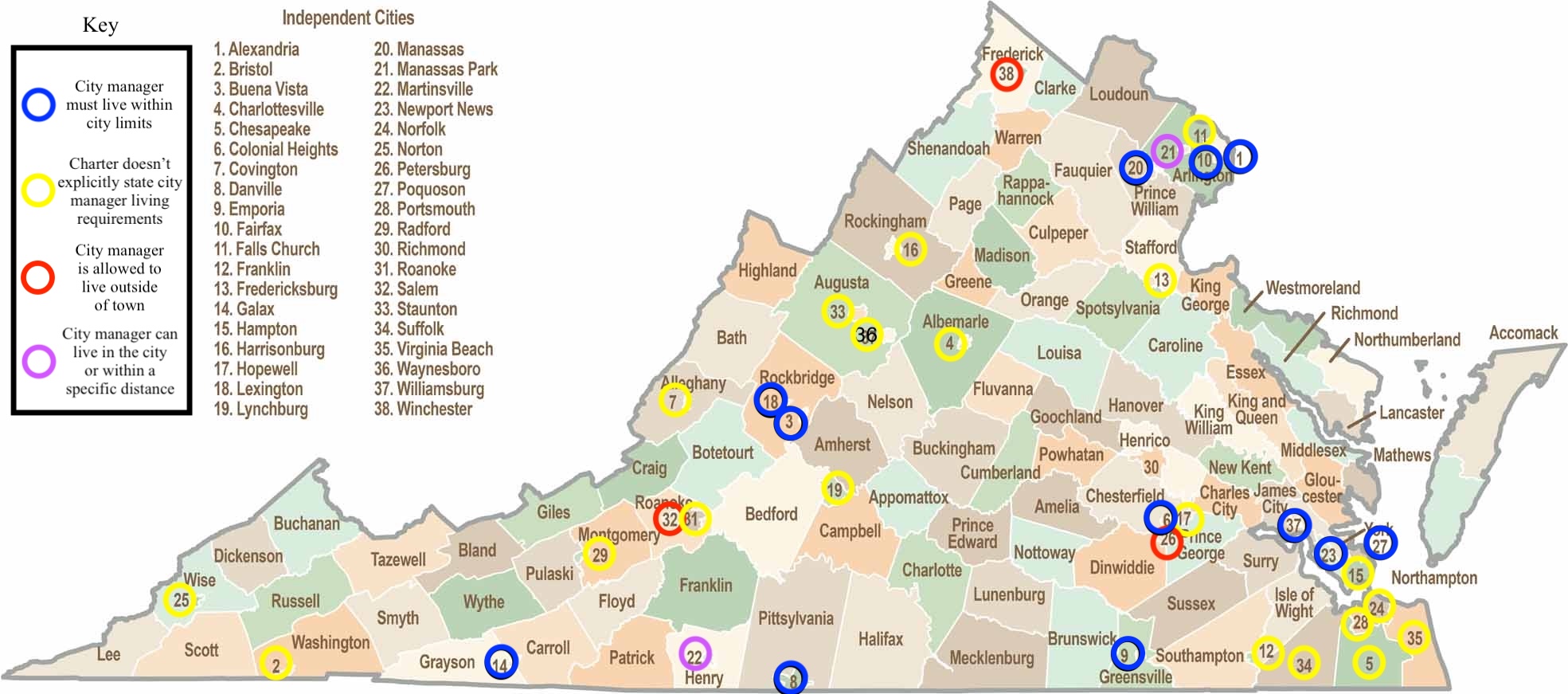
The charter currently requires the city manager to live in Lexington. But city council introduced an amendment in December that would have made residency optional, citing past city managers’ struggles to find housing in town.
Lexington City Council member David Sigler said Lexington’s limited housing market doesn’t always allow the city manager to find housing in the city.

“The city manager has always lived in the city,” Sigler said. “But it’s getting increasingly difficult for people, for anyone, to find housing. We wanted the flexibility that is granted to city managers about numerous cities and towns already in Virginia.”
Lexington City Manager Tom Carroll, who moved to the area from Maryland when he started the job in 2024, said it took him and his wife 14 months to find a house that was affordable and met their needs.
“My wife and I looked at 24 houses before we found the one that we purchased,” Carroll said.
Lexington City Council member Leslie Straughan said council allowed Carroll to rent a house in Rockbridge County while he and his wife were actively house hunting.
“According to our charter, we shouldn’t have let him rent outside the city limits until he could find a house,” Straughan said. “But there were no suitable rental options for them in the city at that time.”
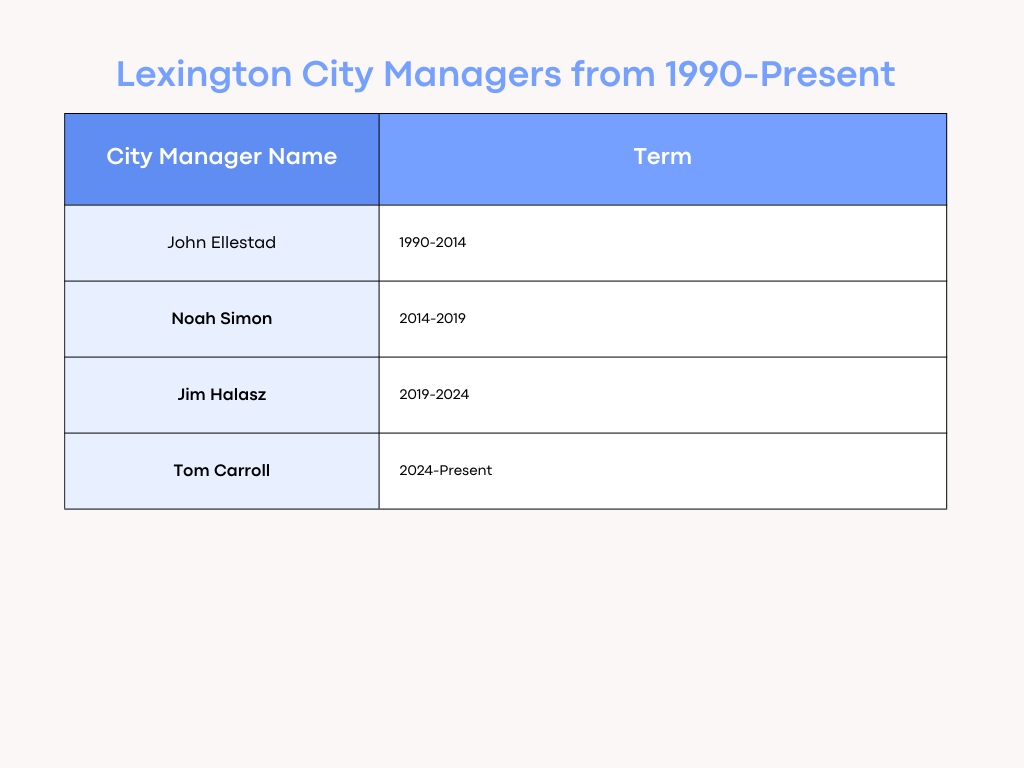
City managers struggling to find housing in Lexington isn’t a new phenomenon. Straughan said the past three city managers faced challenges in their residential search, and she thinks it will affect future city managers.
“I think requiring the city manager to live in Lexington will hinder council’s ability to hire future city managers,” Straughan said.
Jim Halasz, Lexington’s last city manager, said that in May 2022 he and his wife were in their second rental home in two years, and the landlord could not renew the lease. He shared this with council and said that he and his wife would not live in a third rental.
“It was a quality of life we were not willing to accept,” Halasz said. “We just could not see spending more cash on renting.”
Council allowed Halasz to look outside of the city, and he found somewhere to live before his lease was up.
“Had we not found a home here at that time, I probably would have retired and moved to Michigan where most of our family is,” Halasz said.
Halasz said he does think it’s in the community’s best interest for the city manager to live in town, but that isn’t always possible.
Sigler said the General Assembly’s pushback to the proposed changes was unexpected.
“They took offense to our wording about our city manager, and voted down that change to our charter,” he said.
In the House Counties, Cities and Towns Committee, Del. Dan Helmer proposed to change council’s amendment back to the original language.
“To move this forward, I think we’re going to have to strip that provision,” Helmer said.
Carroll said adequate compensation is not the issue. It’s the narrow housing market in Lexington.
“[Helmer] was talking from the perspective of, ‘You can’t afford to live in Lexington,’” Carroll said. “And the reality is, I can. It’s just a limited supply of housing, but he didn’t know that local context, nor would I expect him to.”
The amended version of the charter passed in the House and Senate and was signed by the speaker of the House and Senate president on Monday. The bill is now awaiting action from Gov. Abigail Spanberger.
Sigler said he wants to continue to attempt to change the charter, so Lexington’s city manager is treated similarly to city managers in some other localities. Some cities, like Lynchburg, do not explicitly state in their charter that the city manager must live in town.
“Although not up to me, I personally will be in favor of trying to amend the charter again,” Sigler said.