

By Isabella Custard
Like law enforcement nationwide, the Rockbridge County Sheriff’s Office is struggling to handle an increasing number of mental health-related emergency calls.
“I think the biggest changes that we’ve seen in recent years is the sharp increase in the mental health-related calls that we’ve received,” incumbent Sheriff Tony McFaddin said during a candidate forum Sept. 23 hosted by the local Chamber of Commerce. “These calls require a great deal of time and attention from our deputies, and when someone is in crisis, since we don’t have a local treatment center, we have to sit with the individual at the hospital while we are waiting for a placement at an out-of-town facility.”

McFaddin told the Rockbridge Report later that the sheriff’s office received 140 mental health-related calls for service between September 2024 and last month.
All three candidates for sheriff—McFaddin, Chris Norris and Fred Smith—were asked about police response to mental health calls during the candidate forum. The candidates received the questions in advance. The Rockbridge Report followed up with interviews with all three candidates.
They agreed that Virginia law presents the biggest obstacle and needs to be changed.
“A lot of what we do is guided and directed by the state as far as how many hours we have to sit with them, what facilities are available to take them to, how much funding is available to make sure that we have enough money to pay for all this,” McFaddin said in an interview with the Rockbridge Report following the forum.
The Rockbridge County sheriff is responsible for the county and Lexington. The race is nonpartisan. McFaddin has been sheriff since he succeeded Steve Funkhouser, who retired in January 2025. Norris retired in 2023 after 27 years of public service, including as a county sheriff’s deputy and firefighter. He now works as an officer with for the Carilion Clinic Police Department. Smith worked for 35 years as a police officer in Lexington until he retired in 2015.
The emergency mental health case process
A typical mental health-related call begins when a citizen notifies law enforcement that they consider a person to be harmful to themselves or others. If that person is taken into custody involuntarily, the officer can issue a paperless emergency custody order (ECO).
An ECO keeps an individual in custody for eight hours. In that time, the individual is evaluated by a clinician at the Community Services Board. If the clinician finds the patient is a safety risk, a magistrate is asked to issue a 72-hour Temporary Detention Order (TDO).
The three candidates for sheriff said at the forum that the requirements for implementing TDOs strain law enforcement resources because officers must stay with individuals who are in custody until a suitable mental health facility has been assigned. If and when magistrates issue TDOs, officers are also required to transport the individuals to their assigned facility, which could be anywhere in the state.
For Rockbridge County and Lexington, mental health calls present another challenge: There are no local mental health facilities.
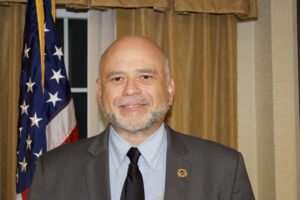
“That could be anywhere from Western State in Staunton,” Norris said in an interview, “I’ve had to take people close to the West Virginia state line on. Beyond Blacksburg and Pulaski, down that way. There is also another mental health hospital that Carilion operates in the New River Valley. So, you really don’t know where they’re going to end up. It’s wherever that bed placement is.”
As a result, TDOs can preoccupy Rockbridge law enforcement for hours if not days, the three candidates said.
Norris said TDOs impact public safety because deputies must stay with individuals until dropping them off at the assigned mental health facilities. That means that a deputy can’t respond to other emergency calls. It also can mean that sometimes deputies must relieve each other at shift changes to ensure that an officer sees the commitment through.
The predicament for law enforcement has existed for years.
A real-life example of challenges for law enforcement
Smith said he remembers a situation in the late 1980s when he once had to bring his wife with him to escort a mental health patient to Charlottesville. Smith couldn’t ride alone in the car with a woman, and the police chief at the time could not spare another officer.
“The chief said, ‘Would your wife ride with you?’” Smith recalled in an interview. “She rode with me to Charlottesville because it was a female. If not, we’d have had to take two officers to go because you couldn’t transport a female by yourself.”
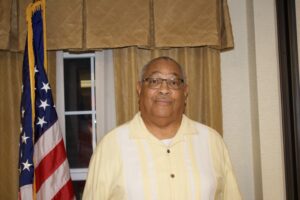
That’s why, Smith said, he would hire more female officers if he were elected.
“I want to put a female on each shift,” he said at the candidate forum.
Norris said many of the mental health emergency calls are the result of side effects of illegal drug use.
“These individuals, they’re often given a choice between treatment and jail,” he said at the forum. “And that sounds like a very simple choice for that person to make, so they’re voluntarily brought to the hospital. I believe this is an inappropriate setting for drug intoxication. These people frequently exhibit paranoia and violence towards hospital staff, yet often the jails refuse to admit them due to potential medical issues.”
Drug crises and the deputy’s job
In the Rockbridge area, methamphetamine use has long been a problem.
Norris said he wasn’t trained to spot whether a person is having a mental health-related episode or experiencing a bad reaction to an illegal drug. He learned through on-the-job experience how to recognize the signs of drug abuse.
“Training can definitely be provided to newer deputies and other police officers that don’t have the experience in spotting if there is an issue with either methamphetamine use causing a mental emergency, or if it was an actual mental health issue,” Norris said during an interview.
Smith supports more training for deputies, too.
“Well, first thing I’m going to do is get all of the deputies trained in CIT (Crisis Intervention Team),” he said in an interview. “It’s a training that tells you how to deal with these mental health people.”
Ultimately, all three candidates agreed that community education is the best first step in helping law enforcement respond to the challenges of mental health-related emergency calls.
“I think we as a community, me as the sheriff, we need to talk with our community partners, make sure what we’re doing is the best way to handle it,” McFaddin said.