

By Shauna Muckle
Lexington City Council nixed a proposal for a downtown donut shop after neighboring residents offered a smattering of complaints, including likening the potential smell to that of a skunk.
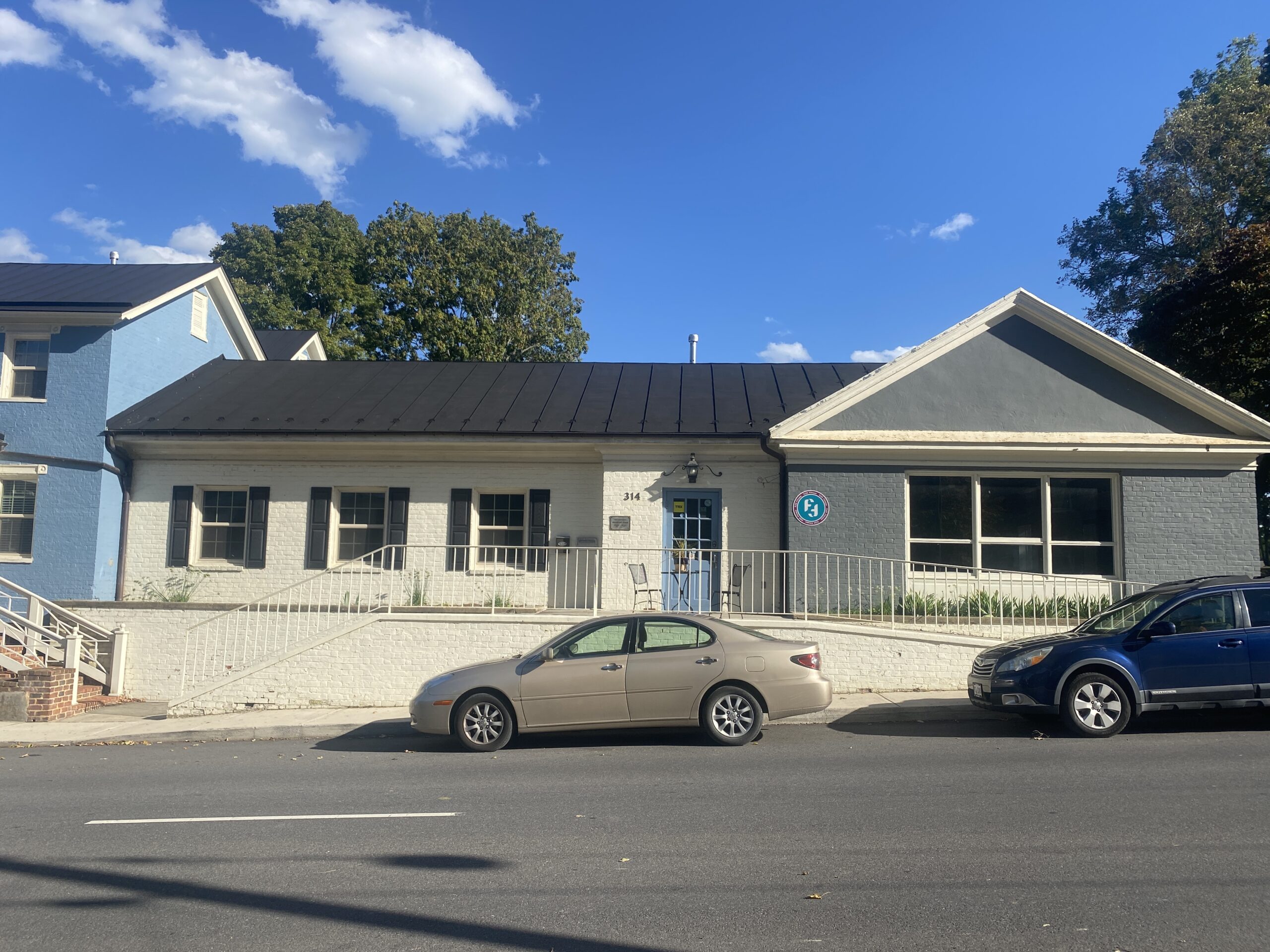
Multiple residents at a Sept. 15 council meeting said the HUB building at 312/314 S. Main St., also home to fLEX Fitness Studio, lacks sufficient parking for the proposed General Donuts shop’s carry-out restaurant. Retiree Gladys Hopkins, who lives across the street at 317 S. Main St., said the odor of frying donuts would decrease property values in the area and prove disruptive.
“We have a neighborhood skunk. That little skunk doesn’t even have to squirt. He just has to walk through our neighborhood,” Hopkins said. “It wakes us up, and I don’t sleep with my windows open. The smell of frying donuts starting at what, 2:30, 3 a.m. in the morning is definitely going to keep me awake.”
The exhaust fan installed by the shop would be “offensively noisy,” her husband, Robert Hopkins, added.
Robert Hopkins also took aim at General Donuts’ business plan, saying he had consulted competitor Pure Eats about their sales volume. Another neighbor, Pam VanMeter, said placing a carry-out donut shop next to Oak Grove Cemetery, which is adjacent to the HUB building, would be “insufficiently reverent.”
Gladys Hopkins said the building’s landlord would regret installing a business that has been met with so much neighborhood disapproval.
“I don’t think this is fair to the taxpayers of Lexington,” she said. “I don’t see any advantage to the owner of this building, upsetting an entire neighborhood.”
Council Member Dennis Ayers, who broke from the rest of council to approve the donut shop, described residents’ comments on noise and smells as “overblown and properly addressed and minimized by the landlord and tenant’s plans.”

General Donuts owner Dawson Moody had to apply for a permit from the city because the space, vacated by the Lexington Bicycle Shop in March, is in a semi-residential zoning district, known as residential-light commercial, that requires eateries to seek city approval. Moody and the building’s landlord, Baldwin Locher III, tried to fend off resident complaints. Locher showed council members decibel count readings taken near Red Hen, which operates an exhaust fan. From 70 feet away, ambient noise generated 54 decibels—when standing next to the fan, the reading increased by only 10 decibels, to 64, he said.
As for potential smells, it helps to have a sniff near Pure Eats. On a recent morning, the burger and donut shop emitted no distinct smells.
On top of disputing residents’ comments, Locher emphasized the benefits to the city. Moody’s revenue projections include between $2,800 and $3,500 in tax revenue, as well as employment opportunities and increased foot traffic for other Main Street businesses.
Council members ultimately denied the business in a 5-1 vote, citing zoning laws. General Donuts had applied to move into the 800-square-foot space as a “small restaurant.” But the city’s definition includes a clause that small restaurants must be “characterized primarily by table service.”
Council members had another reason to reject the proposal: the city’s Planning Commission had recommended denying General Donuts in a 4-2 vote. City Planner Arne Glaeser had recommended approval, but he said that was before discovering from Moody that 95% of the business would consist of carry-out.
“We’re put in a position, since the Planning Commission is professionally trained and takes the first stab at applying the zoning code to the question, we’d have to have some other mitigating circumstances to overrule them on that,” Council Member David Sigler said in an interview.
At the Sept. 15 meeting, Ayers, who is retiring at the end of the year, warned of the resident outrage that could follow next time the city has to consider a business permit for the space.
“It’s a very strange location. What business would fit there? If it’s not this, which to me seems like a light-commercial venture, it’s eventually going to be something else,” he said. “It may be something the neighbors like less than a donut shop.”
Ayers also pointed to the potential commercial uses of the building that would be considered “by-right,” meaning city approval isn’t required. Those uses include potentially noisy operations like clinics, day-cares and consumer repair shops.

Sigler said he sees residential-light commercial districts as a “transition space” between downtown and Lexington’s residential areas.
Council members have wide discretion in approving or rejecting conditional use permits, Glaeser said, even if businesses do meet all definitions and requirements.
Sigler said he doesn’t want Lexington to be perceived as anti-business after the dispute. He encouraged Moody to remain in Lexington—just in a different space.
“You hate to turn away someone that wants to invest in the city of Lexington,” he said.
Some established Lexington businesses have left due to cramped downtown buildings. Chocolatier Cocoa Mill recently moved just outside of town to the strip mall anchored by Tractor Supply Co. in Rockbridge County. Owner Mike Mayo said the move gives the chocolatier triple its square footage on one level.
“I looked at a lot of spaces in downtown Lexington, but we needed more space. We miss being in downtown, but even taking delivery of our materials was a real hassle,” Mayo said.
Sometimes, Mayo had to meet delivery trucks at the Food Lion parking lot because of downtown’s narrow streets and limited parking.
Mayo said there are definite benefits to businesses like General Donuts opting for the county, including increased square footage and lower utility rates and taxes.
Now that General Donuts won’t occupy the Main Street space, Sigler said the council will wait for the next permit request and engage in similar deliberations.