

By Lindsay Castleberry
For new businesses, putting up a sign may get pushed to the bottom of an owner’s to-do list.
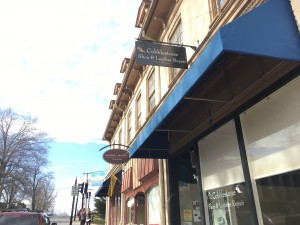
That’s what happened at Cobblestone Shoe & Leather Repair, which opened on East Nelson Street in December. The store operated without a real sign until last week.
The business was able to replace its makeshift paper sign with one made of metal and vinyl thanks to Main Street Lexington’s new Signs and Awnings Grant Fund.
“It was a pleasant surprise to realize someone would pay anything at all with as much cost that incurs now to open a business,” Greg Moore, the store’s owner, said. “Signage is a very small part of it, but every dollar helps to offset our costs.”
The city granted $2,000 to Main Street Lexington, a volunteer organization that works to enhance the city’s downtown, to help new and existing businesses revamp their storefronts.
Cobblestone Shoe & Leather Repair is the first local business to benefit from the program.
Eight businesses — including retailers, restaurants, a real estate agent and an antique store — have expressed interest since the program was announced three weeks ago.
Stephanie Wilkinson, executive director of Main Street Lexington, said the recent revival of downtown Lexington made it the perfect time to launch the initiative.
“One of the most important things you have in a beautiful town like we have is well preserved buildings and businesses that are still thriving in this era of malls,” Wilkinson said. “We take a lot of pride in Lexington and how our town looks.”
While there are far fewer empty storefronts today than there were three years ago, Wilkinson said it’s still not easy for businesses to thrive in the small town. Many individuals who own businesses in town don’t own the buildings they operate from, which can make renovating a storefront difficult.
Wilkinson said the Signs and Awnings Grant Fund is one way Main Street Lexington hopes to support local businesses and ensure the downtown area looks great for everyone traveling through the city and for those who shop and live here.
“First impressions are very important,” Wilkinson said. “You drive through a town and if you see a place that doesn’t look good on the outside, it can be gorgeous on the inside, have fabulous stuff, low prices, and everything you want but you’re just going to keep going by if it doesn’t look great from the outside.”

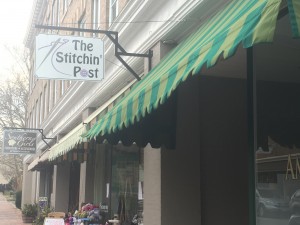

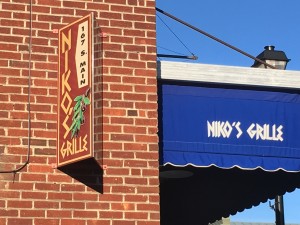
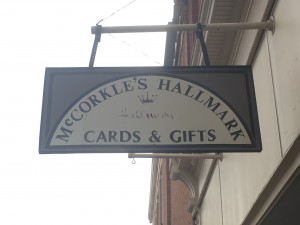
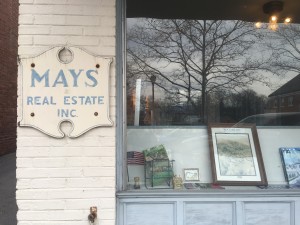
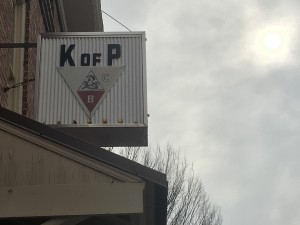

While downtown preservation is a top priority for the group, meeting the costs of maintaining and improving buildings can be daunting for small business owners.
The Historic Lexington Foundation has helped alleviate that burden by giving out grants to property owners for more expensive improvements, such as repainting buildings, pointing brick and repairing windows. However, this program does not apply to signs or awnings.
That’s where the new grant comes in. To secure funds for a new sign or awning, business owners must submit an application to Main Street Lexington. The Architectural Review Board then approves or rejects applications before shop owners can officially get their signs.
To determine the level of funding, Main Street Lexington conducted a small survey of businesses that had recently purchased their own signs. The group found the median cost for a sign was $600, while awnings started at $1,500.
Businesses in downtown Lexington can receive a dollar for dollar match, up to $300 for signs and up to $600 for awnings.
According to Wilkinson, many communities across the nation have this kind of program. “We certainly didn’t invent this,” she said. “It’s a very common program and that’s because it works. It’s common because it supports the mission of a community that cares about its downtown.”
The sign Moore chose was less expensive than the median price. For that reason, Wilkinson said the number of businesses that will benefit from the grant depends on how much money each business spends.
Wilkinson said Main Street Lexington has received positive feedback confirming the necessity of the program.
In 2014, researchers at the University of Wisconsin-Extension and the Wisconsin Economic Development Corporation studied 24 downtown storefront improvement projects to help business and community leaders make informed investment decisions.
They found that even small investments in storefront improvement projects have a large impact on sales and rental income.
More than 80 percent of the businesses in the case study reported an increase in the number of first-time customers and a boost in sales. It also found that nearby businesses experienced increased sales from improvements to neighboring buildings.
City Council approved funding for this program for the rest of this fiscal year, which ends in June. When the next budget cycle begins in July, Wilkinson said Main Street Lexington plans to request more money to fund the program.
“So many times everything takes away or everything you do costs, and again, it’s not a huge amount of money, but still it was just kind of like saying, ‘Thank you for being a part of the downtown; we appreciate it, and we’re behind you,’” Moore said.