

BY BETSY CRIBB
Paying for public safety these days relies increasingly on fees associated with speeding tickets and other mostly minor violations.
In Rockbridge County, fines and “court costs” from drivers now pay for about 10 percent of the county sheriff’s $3 million budget.
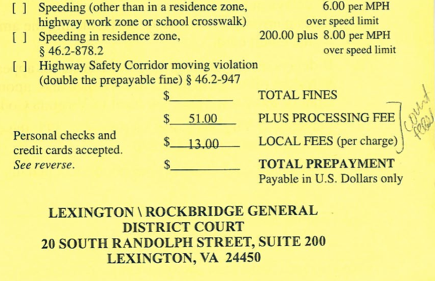
In non-residential areas, speeders are charged $6 for each mile they go above the speed limit. That can add up quickly.
In addition, each speeding ticket and some lesser charges, even if eventually thrown out, come with an automatic $64 in court fees.
The court fees are a revenue generator for the state’s general fund, said Rockbridge County Clerk of Court Bruce Patterson.
“The Virginia General Assembly, over the last 10 years, has not wanted to raise any taxes, and so they come away saying they’ve never raised taxes,” Patterson said. “But they continuously raise court fees.”
Rockbridge County Sheriff Chris Blalock said that every speeding ticket, whether it is issued by county deputies or city police, includes these court fees.
Only a small portion of the fees, about 20 percent, goes towards courthouse maintenance and security. The rest goes into the general fund.
“We have five bailiffs who are deputies who provide security both in the courthouse and for the courtrooms,” Blalock said. “And we have to man a control room whenever … the courthouse is open.”
Meanwhile, speeding fines and misdemeanor fines bring money back to the county, Blalock said.
“If the deputy writes the ticket for a local ordinance … that fine would come back to the county. And those [fine-based] funds usually run around $300,000 a year,” Blalock said.
But Blalock said those fines don’t make up for the loss of state aid in supporting the county Sheriff’s Department.
“Our payroll comes from the state, but our office expenses, our vehicle expenses all come from the county,” Blalock said. “Years ago, the state paid almost everything towards the sheriff’s office.”
Patterson said raising court fees is good politics, but not good policy.
“It’s a horrible way to collect money for the state. I think you’ve got to bite the bullet [and raise taxes],” Patterson said. “But nobody likes paying taxes.”
Local police officers weigh the individual circumstances when handing out these revenue-generating tickets.
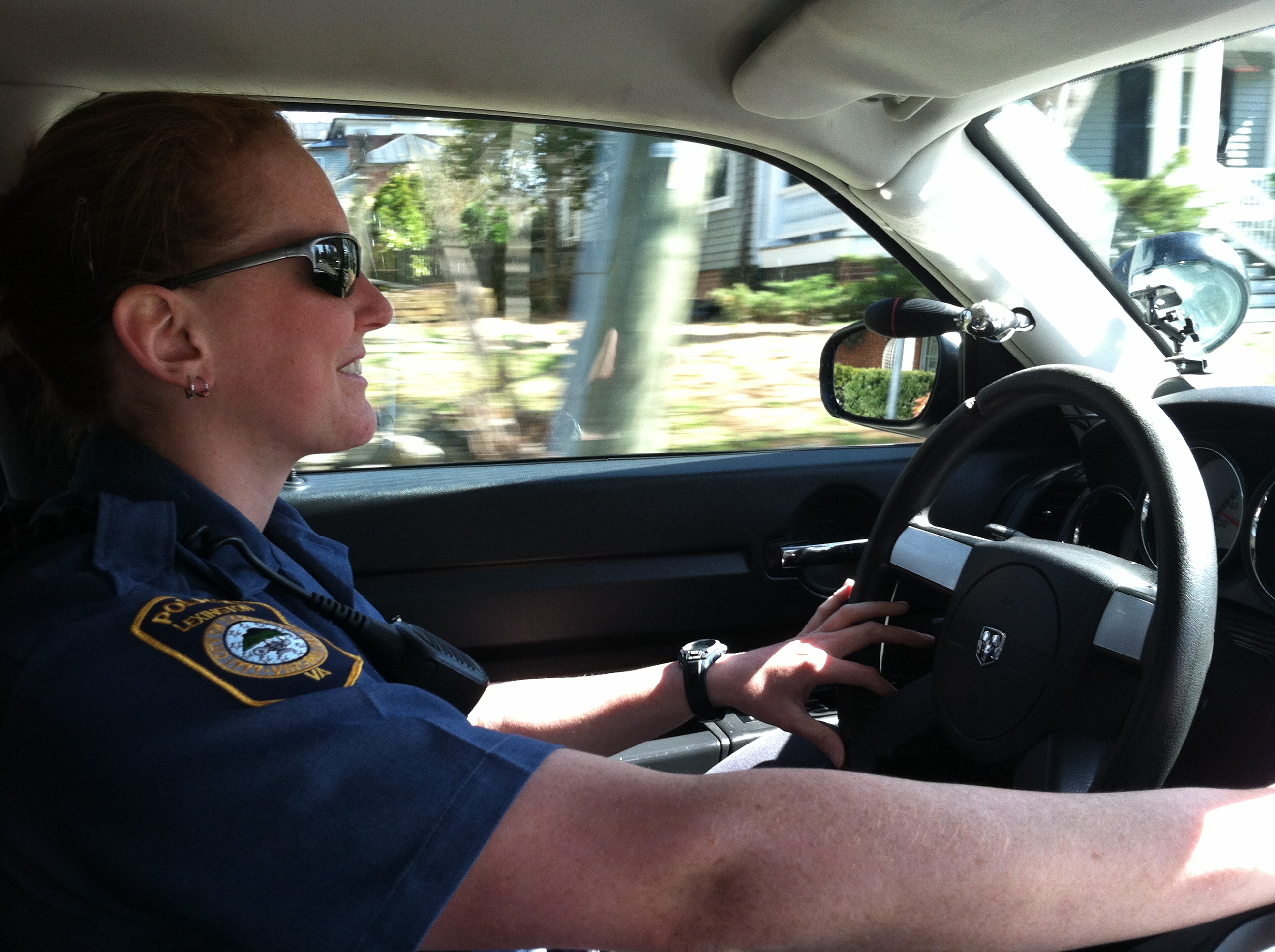
This week, for example, Lexington patrolwoman Jess Burks pulled over a man for driving 39 mph in a 25-mph zone. The driver said he was speeding “because he had to pee.”
That excuse didn’t fly with Burks. The man got a ticket that will cost him $148, court fees included.
On the same shift, Burks pulled over a woman for driving 51 mph on Route 11 across the Maury River bridge, where the speed limit drops from 45 to 35.
The offender, who “looked pretty shaken up,” apologized and told Burks that she had just received news that her aunt was dying in the hospital.
Burks didn’t write her a ticket.
“That’s the great thing about this job,” Burks said. “We have discretion with how we handle speeding in certain situations.”